
| Prof. C. L. Philip Chen IEEE Life Fellow, Fellow of AAAS, IAPR, CAA, CAAI and HKIE Member of Academia Europaea (AE) South China University of Technology, China (click) C. L. Philip Chen is the Chair Professor and Dean of the College of Computer Science and Engineering, South China University of Technology. Currently, he is the director of two Guangdong Provincial Key Labs, the director of an Engineering Research Center funded by the Ministry of Education, and Co-President of Guandong AI Industrial Entrepreneur Association. He is a Life Fellow of IEEE, Fellow of AAAS, IAPR, CAA, CAAI and HKIE; a member of Academia Europaea (AE); and a member of European Academy of Sciences and Arts (EASA), a Foreign Full Member of Russian Academy of Engineering (RAE). He received IEEE Norbert Wiener Award in 2018 for his contribution in systems and cybernetics, and machine learnings; received IEEE Joseph G. Wohl Outstanding Career award; Wu WenJun Outstanding Contribution award from Chinese AI Association; received Outstanding Electrical and Computer Engineering (OECE) Award from his alma mater, Purdue University; and received “2025 Forbes China® Artificial Intelligence Influential Figure” award. He has been a highly cited researcher by Clarivate Analytics continuously for six years, and is, continuously, listed in Stanford University/Elsevier World’s Top 2% Scientists in "Lifetime Science Impact Ranking" and the "Annual Scientific Impact Ranking (top #47 world-rank in AI and image processing category in 2025)", both rankings. He has Google Scholar more than 80,000 citations with 134 H-index. In professional service, he was the Editor-in-Chief of two IEEE Transactions and served as the President of IEEE Systems, Man, and Cybernetics Society (2012-2013). His research areas are computational intelligence, unmanned systems, intelligent control and systems. Speech Title: Recent Artificial Intelligence Development Trends and Innovation Paths |

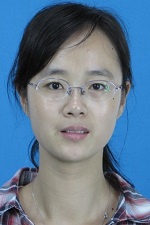
| Prof. Yanhua Long Shanghai Normal University, China (click) Dr. Yanhua Long is a Full Professor in Shanghai Normal University, China. She received her PhD in the Department of Information Science and Technology from University of Science and Technology of China (USTC) in 2011, and she was also an Associate Researcher at the Speech Group in Cambridge University Engineering Department, UK, from 2011 to 2013. Her research interests lie at speech signal processing, including multilingual speech-LLMs, speech enhancement, target speech extraction and acoustic event detection. She has published over 70 papers in leading venues such as ICASSP and INTERSPEECH and has led several high-level projects, including those funded by the National Natural Science Foundation of China. She has also guided her team to top results in major international speech processing challenges, taking home 1st place in the 2023 VoxSRC (Track 1), 2nd place in the 2021 DCASE Challenge, and top honors in multiple categories at the Blizzard Challenge 2020. Speech Title: Advances in Target Speech Extraction at SHNU |
| Prof. Cedric Marco-Detchart Public University of Navarre, Spain (click) Cédric Marco Detchart holds a PhD from the Public University of Navarre, where he is currently an Assistant Professor in the Department of Statistics, Computer Science, and Mathematics. His research is conducted within the Artificial Intelligence and Approximate Reasoning Group (GIARA), focusing on uncertainty modeling, information fusion, and perception in computer vision. He holds a Bachelor’s degree in Computer Science from the Public University of Navarre and a Master’s degree in Artificial Intelligence, Pattern Recognition, and Digital Imaging from the Polytechnic University of Valencia. During his PhD, he completed a research stay at the Center for Computational Sciences (C3) at the Federal University of Rio Grande do Sul (FURG) in Brazil, working on perception models based on information integration. After completing his doctorate, he worked as a postdoctoral researcher at the Valencian Research Institute for Artificial Intelligence (VRAIN) at the Polytechnic University of Valencia, where he participated in applied artificial intelligence projects. His work focused on improving human-computer interaction, information fusion, and cognitive assistants using uncertainty models and perceptual comparison theories. In the academic field, he has taught courses on programming, computer science, and simulation in both engineering and data science programs. His teaching approach integrates research into the classroom through project-based learning and real-world problem-solving. He has supervised multiple undergraduate and master’s theses on topics such as image segmentation, deep learning, and computer vision systems for decision-making. His scientific output includes publications in high-impact indexed journals (Q1) and contributions to international conferences in artificial intelligence and image processing. He has participated in competitive research projects, collaborating with national and international institutions to develop advanced models for computational perception and uncertainty-based classification. Beyond academia, he has worked on technology transfer, developing applied solutions for various sectors, including precision agriculture and human-machine interaction. He has also engaged in scientific outreach, contributing to discussions on the impact of artificial intelligence across different fields. His research interests focus on the application of perceptual comparison theories in computer vision, with a particular emphasis on advancements in psychology and neuroscience, exploring new ways to enhance artificial perception and improve decision-making in complex environments. Speech Title: From Perception to Precision Agriculture |
